10 Best Practices for Prompt Engineering
Writing effective prompts that drive consistent results can feel more like an art than a science.
We’ve spoken with hundreds of prompt engineers on Prompt Engineering, AI founders, and folks who write prompts every day. Below are 10 easy-to-implement best practices that will help you get better responses from your prompts while using Large Language Model (LLM)
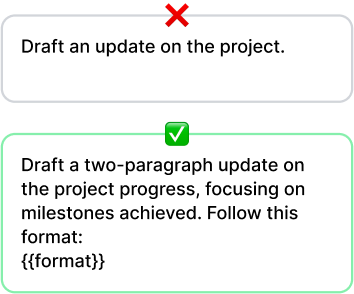
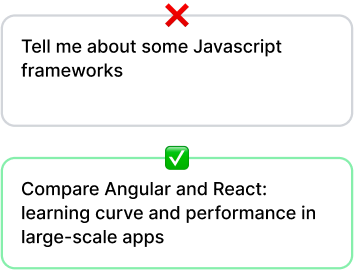
1. Be specific
Being specific doesn’t necessarily mean being short. Longer prompts usually provide more context and clarity.
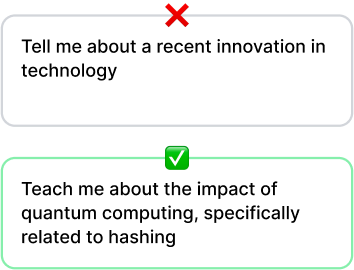
Graphic with before and after examples about being specific with prompts
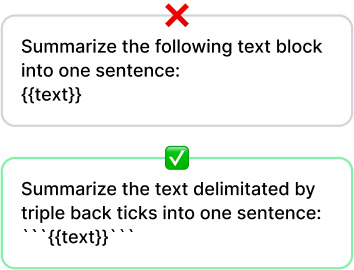
2. Use delimiters
Delimiters help the model understand the different parts of your prompt. This leads to better responses and protection against prompt injections.
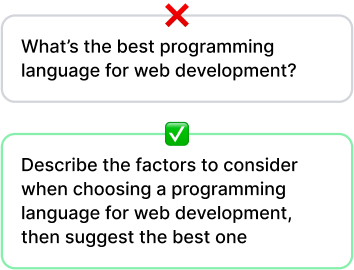
3. Give the model room to think
Encourage the model to think through the problem before giving an answer. Telling the model to reason step-by-step like Chain Of Thought (COT) can help avoid rushing to incorrect conclusions.
4. Quote sources
Directing the model to quote its sources can reduce the risk of hallucinations.
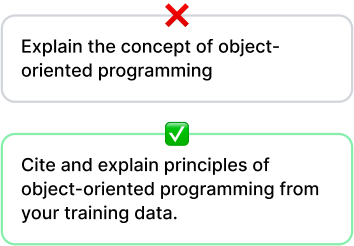
5. Avoid jargon
Use simple, accessible language in your prompts.
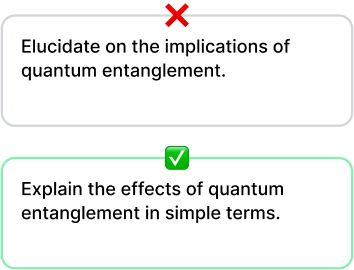
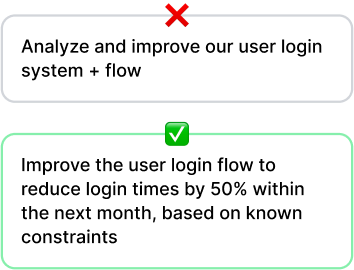
6. Set a goal
The clearer the objective, the better the response. This is an example of how to be more specific with your prompts
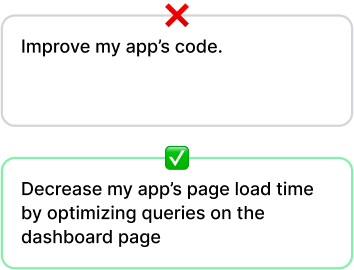
7. Create a scenario
Scenarios help generate more detailed and thought-provoking responses.
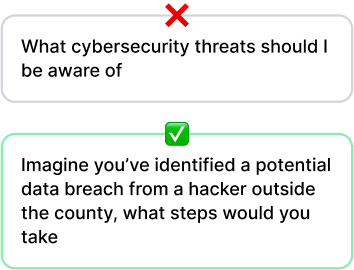
8. Encourage analysis
Prompts that encourage the model to analyze options will lead to more insightful responses. This approach allows the model to think things through.
9. Time-frame it
Incorporate a timeframe to add context or urgency.
10. Clarify the format
Specify the desired structure or presentation of responses. The models respond better when shown specific format requirements.